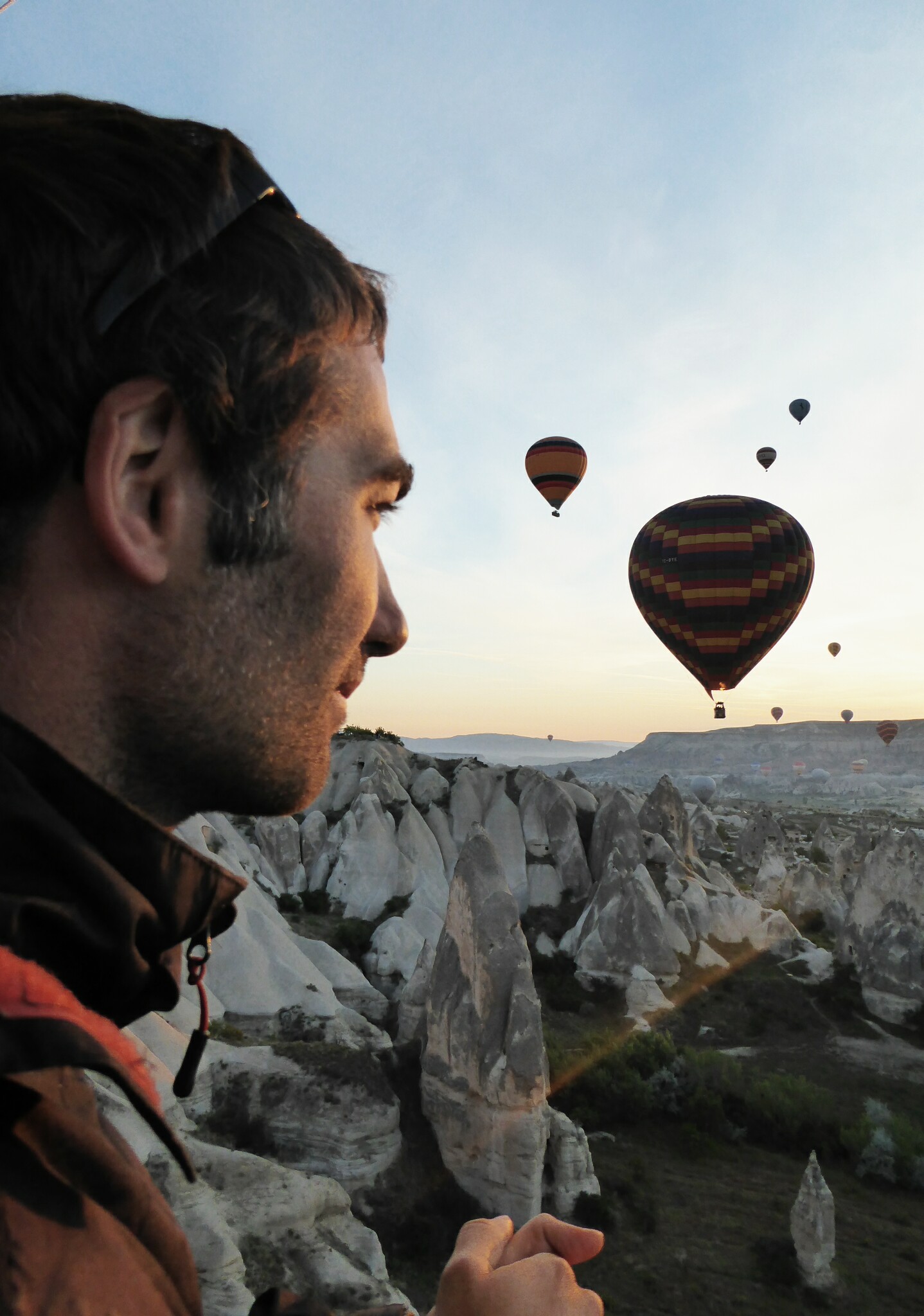
Let me be upfront with you from the very beginning: when people think about exotic teaching destinations in Central Asia, Kyrgyzstan is roughly the last place that comes to mind. Vietnam is sexy. Thailand has its Instagram-perfect temples and 7-Eleven on every corner. Even Kazakhstan and Uzbekistan — Kyrgyzstan’s own neighbours — are riding a growing wave of expat interest, better salaries and a more internationally polished reputation. Kyrgyzstan, on the other hand, sits somewhere between “off the beaten path” and “where exactly is that again?”
And honestly? That is precisely why I went.
Where global attention is scarce, competition is equally thin. There is something quietly thrilling about being one of the few foreign faces walking through the corridors of a school in Bishkek, knowing that your CV will not be buried under a hundred identically formatted applications from equally desperate ESL nomads. After years of teaching and overlanding across Asia, Latin America, Africa and beyond, I decided to throw myself into a Kyrgyz adventure despite — let me be candid — a fairly partial understanding of the local market. What follows is the fruit of that experience, the warts and all version, for anyone seriously considering the same leap.

SOME CONTEXT FIRST: WHY KYRGYZSTAN?
Kyrgyzstan is a small, landlocked country of about 6.5 million people wedged between Kazakhstan to the north, China to the east and the rest of Central Asia to the west and south. It is a country that has been quietly rebuilding its political and commercial identity since independence in 1991, maintaining solid ties with both Russia and China — two rather influential neighbours, as you may have noticed.
Linguistically, the capital Bishkek is strongly Russian-speaking. Head north and Russian dominates comfortably; venture south and the Kyrgyz language takes over. As a foreign English teacher, this means you are parachuting into a country where Russian is your de facto third language (after your mother tongue and English), which is useful to know if you are planning to negotiate your rent, survive a hospital visit or figure out which bus goes where. Spoiler: good luck with the bus regardless.
The country is a growing economy, not yet on the standard expat circuit, which is a double-edged sword. Fewer opportunities, yes — but also far less fierce competition, a friendlier job market for international hires and a cost of living so manageable it can genuinely make your head spin if you come from Western Europe.
So yes, I embarked myself into a teaching adventure there. And here is everything you need to know before doing the same.
CHAPTER 1: THE ONBOARDING PROCESS — KEY FACTS
✅ POSITIVE FACTS
1) Paperwork is gloriously simple by Asian standards.
If you have been through the Vietnamese work visa circus — the apostilles, the notarizations, the translations stacked upon legalizations stacked upon more translations, all requiring you to ship your original documents across multiple continents and wait for months while quietly hyperventilating — then Kyrgyzstan will feel like a warm, bureaucratic hug.
Here you need essentially one document: your apostilled university degree (in any field), in your own language, as a certified (authenticated) copy. No TEFL certificate required. No criminal records check. No legalized, notarized, translated-into-Kyrgyz version of your grandmother’s birth certificate. Just your diploma, authenticated. Your school or employer should then take care of the rest of the process on your behalf. I know. I was suspicious too. But it is real.
2) The visa process is electronic and sensibly designed.
Upon arrival (European passport holders get 60 days Visa free currently), you are issued a temporary 2-month visa while your permanent 1-year working visa is being processed. Crucially, this is all electronic — no handing over your passport to some ministry official for weeks, no mysterious stamps that may or may not appear, no sitting in a waiting room next to a Soviet-era ficus plant wondering where your travel document has gone. The final working visa takes approximately 30 to 45 days to be issued, which by Central Asian standards is practically express delivery. It is also a “unified” document where work visa and work permit resides in one single operation.
3) The school should cover your arrival logistics.
A reasonable school contract here should include: flight reimbursement or purchase (round flight in 12 months), being collected at the airport (a small but deeply appreciated gesture after 15 hours of travel), an initial hotel stay while you find your feet, and — crucially — apartment plus bills (Wi-fi too, if possible) covered for the duration of your contract. Make absolutely sure all of this is spelled out explicitly in your contract before signing anything. “The school will take care of it” is not a legally binding sentence in any jurisdiction. Check carefully paid leave (ideally 2 months per year), sick days (ideally at least 2 weeks a year) and net vs gross salary amount entitlements as well.
List of Cambridge International Schools in Kyrgyzstan.
List of IB International Schools in Bishkek.
4) The salary-to-cost-of-living ratio is genuinely attractive.
A local qualified Kyrgyz monthly salary hovers around 500 USD net. So when a foreign teacher earns 1,000, 1,500 or 2,000 USD per month, that is respectively 2x, 3x or 4x the local average — a comfortable position to be in by any measure.
If your apartment and utilities are fully covered by the school (do negotiate this before signing your contract), your actual out-of-pocket living expenses in Bishkek hover around 500 USD per month for a decent life. Private language schools typically start foreign hires at around 1,200 – 1,500 USD/month, while international schools begin at roughly 1,800–2,000 USD and upwards (be ready to negotiate) . Not life-changing money by Western standards, but very solid purchasing power locally.
This is summary of the due taxes I am currently paying (which should be paid by your employer if you agree on a net salary payment):
| Category | Rate |
|---|---|
| Pension Fund (ПФР) | 8.00% |
| Accumulative Pension (ГНПФР) | 2.00% |
| Income Tax (effective) | 8.97% |
| Total deducted | 18.97% |
Salary should be paid by the 5th of every month. Payslips are not provided at my school, unless asked to Accounting Department.
5) Currency stability.
The Kyrgyz Som is pegged to the US Dollar (currently at around 87 KGS for 1 USD), making it a remarkably stable currency. Unlike many regional neighbors, the Som has held its ground impressively over the last 5 to 10 years — no dramatic crashes, no nasty surprises when you check the exchange rate in the morning. For anyone budgeting a longer stay or simply tired of watching their money shrink overnight, that kind of quiet monetary reliability is honestly worth celebrating.
6) Natural wonders
If you love mountains, hiking, and trekking, Kyrgyzstan is also a paradise, with an average elevation of over 2,500 metres and a landscape dominated by dramatic alpine ranges, high valleys, and endless open steppe. It is also home to an extraordinary concentration of lakes and natural wonders — from the vast expanse of Issyk-Kul Lake to the remote alpine beauty of Song-Kul Lake and the iconic glacial waters of Ala-Kul Lake — making it feel like a different world almost everywhere you go outside the cities (chaotic Bishkek is truly the worst part of the whole country).

❌ NEGATIVE FACTS
1) The medical exams are a bureaucratic odyssey of their own.
If the paperwork side is blissfully simple, the medical examination process more than compensates for that comfort. To obtain a work visa, applicants must navigate a small medical odyssey involving chest X-rays, blood samples, consultations with a dermatologist and an oculist, HIV screening, and a series of doctors (behind anonymous doors) whose primary function appears to be asking pro forma questions before applying another stamp to the growing collection of paperwork. The process usually unfolds over three days across several public hospitals, all operating with what can only be described as a spirited improvisation style of organization.

There are no ticket numbers, appointment systems, or visible waiting lists to impose order on proceedings. Instead, patients cluster outside doors and negotiate access through a fluid interpretation of “first come, first served,” in which determination, persistence, and a willingness to occupy strategic positions near doorways can prove surprisingly valuable.
Expect little to no guidance. Expect to pay for your exams upfront in cash (or electronically) and request reimbursement from your employer afterwards (keep every single receipt). The HIV test, notably, is conducted at a separate hospital from the general health checkup, and that second hospital has an atmosphere that one might generously describe as bazaar-adjacent. You will find your way. Eventually. Possibly after being redirected three times by people who are not entirely sure where they are either.
The main tests (including X-rays) were taken here (blood test results available the following working day at floor 1 past the reception):
Whereas the HIV test must be taken here with results available at the same place the following business day after 2 pm:
2) Bishkek is chaotic. Genuinely, productively, exhaustingly chaotic.
If you are arriving from a tidy Northern European city with synchronized traffic lights and an app that tells you the bus is 4 minutes away, Bishkek will recalibrate your expectations with some efficiency. The capital is congested, noisy and polluted, particularly in winter when a combination of coal heating and vehicle exhaust turns the air a shade of grey that politely invites you to stay indoors. Traffic is abundant and somewhat anarchic. Traffic lights are heavily placed every few hundred meters with annoying asynchronous functioning obliging you to stop at almost every crossroad in Bishkek. Distances that look manageable on Google Maps have a way of expanding dramatically in real life. 4 Km distance can take up to 30 minutes sometimes in hellish conditions.
Oh, and bring your patience at traffic lights. Bishkek drivers treat the red light like a starting gun — honking begins before the green even appears, sometimes mid-yellow, occasionally out of pure anticipation. One second of hesitation and a symphony of horns will kindly remind you that everyone else was ready before you were.
Be very mindful of distances and travel times when planning your daily commute. What looks like a 20-minute trip can routinely become 50 minutes during peak hours.
3) Information is fragmented and residency registrations are repetitive.
Communication from institutions — and occasionally from employers — can be patchy. Nobody is going to hand you a laminated “New Expat Checklist” at the airport. You will often have to piece things together yourself.
One bureaucratic quirk worth knowing in advance: residency registration at the local office must be completed three separate times — at arrival, upon your temporary visa, and again upon your 1-year working visa. It is not complicated, but it is tedious, and nobody will necessarily remind you when the next one is due, even though at last minute or past expiry date, they may still warn you. Set a calendar reminder to be on a safe side.
One last aspect concerns the fact that although the initial contract only lasts 1 year, before the 6 months of service you are not entitled by law to get paid holidays (2 months) during summer if you start after January (unused holidays should be then compensated at the end of the contract).
Final note: you need to register yourself as a teacher on this gov portal within the first months of your employment too. Your login is your TIN (according to the passport) number and you must create a PIN. To complete the approval process, you must enter your name in the Russian alphabet exactly as it appears in your tax document and ensure that all required fields are fully completed. You must also accept the terms and conditions by ticking the relevant checkbox. A verification code is sent to your email address and remains valid for one-time use during the registration process. Once registered and entered with your new credentials, you could edit your profile for job title and duties. I hope it helps.
4) Inflation is very high in Kyrgyzstan at the moment, currently in 2026 at 11-12 %. However the local currency (Som) is pegged to USD for stability.
APARTMENT COSTS
Central Bishkek apartments typically run between 45,000 and 60,000 KGS per month (approximately 400–600 EUR), depending on location, size and whether the landlord considers “fully furnished” to include a working shower head or merely the shower tray (by the way, my apartment was entirely furnished, with only a few items missing).

Utility bills — electricity, garbage, heating and water — add roughly 3,000 to 5,000 KGS (30 – 50 EUR) per month, with WiFi (1,000 per month) usually included in that figure. As mentioned, your school should ideally be footing all of this. But even if they are not, the numbers remain very manageable. Water is usually filtered with a purifier, making you save some extra money at the end of the month too.
Recycling doesn’t exist here — no sorting, no separate bins, no second thoughts. Everything goes in one bag. For a country with such breathtaking nature, it’s a contrast that’s hard to ignore.
SCOOTER
A scooter is not a luxury in Bishkek. It is close to a survival tool.
The city’s bus network exists in a technical sense — buses do circulate — but they are slow, overcrowded and operate on schedules that can charitably be described as approximate. The spectacle of locals jostling for standing space inside a minibus with the structural integrity of a tin can is something you will witness daily. Without your own transport, your commuting life risks becoming genuinely nightmarish.
The local app Lalafo is the go-to marketplace for second-hand scooters (and for many additional services such as Transport, Property, Home and Garden, Construction, Electronics, Jobs, Sports, etc.). Most available options are Chinese-brand models — competitively priced but not exactly engineered for a decade of trouble-free service. Budget between 50,000 and 65,000 KGS (roughly 500–650 EUR) for a nearly new Chinese scooter, with new models touching 80,000 KGS.

Here comes the genuinely surprising part: as of writing, police do not currently enforce plate registration, insurance or even a specific licence category for scooters up to 150cc, as long as you wear a helmet and follow general traffic rules. Scooters remain relatively rare in Bishkek, they are seasonal (usable roughly from March to November), and authorities simply have not made them a priority yet. Enjoy it while it lasts, because this is exactly the kind of pragmatic loophole that tends to get closed right after you have parked yours.
Additionally, you can basically park it everywhere even on sideways and next to entrance doors.
Practical tip: look for machines with under 3,000–5,000 km on the odometer. Chinese manufacturers do not exactly have a reputation for building engines that age gracefully. Thouroughly verify indicators, tyres and breaks. You can pay in cash directly to the seller (rarely English spoken though), who will provide factory papers and — if you are lucky — one complimentary helmet that may or may not fit your head : )) An additional helmet might cost you between 1,500 SOM and 3,000 SOM (15 to 30 EUR).
Gas stations here come with a plot twist. Forget attendants — it’s full self-service, and you pay before you pump. Choose your fuel: the premium Super 95 at 85 Som (~€0.80) or the budget-friendly Super 92 at 75 Som (~€0.70) — prices that’ll make any Western driver weep with envy (as of June 2026).
The catch? If the station office happens to be closed, you’re on your own — and let’s just say I spent an embarrassingly long time standing next to a pump, looking very confident while understanding absolutely nothing.
A word to the wise for anyone renting a car or hopping on a scooter: Bishkek’s traffic police are not just an occasional presence — they are everywhere. Intersections, traffic lights, crossroads — consider them permanently staffed. Officers monitor closely and consistently, so this is absolutely not the city to try your luck with a rolling stop or a creative interpretation of a red light.
And every now and then, the city throws in a bonus surprise: entire roads suddenly blocked off, traffic diverted without much warning — a VIP motorcade or political convoy passing through, apparently unbothered by the concept of rush hour. When it happens, there’s not much to do but park your impatience, watch the spectacle, and remind yourself you’re not in a hurry anyway. You’re traveling.
Stay sharp, follow the rules to the letter, and embrace the occasional unplanned detour. Think of it less as chaos and more as… highly supervised, occasionally presidential, driving practice.
GYM
Keeping yourself sane through a Central Asian winter requires a certain degree of deliberate effort. Signing up for a gym membership early is one of the best investments you can make — not just physically but mentally.
I personally joined Pulse Fitness, a solid, modern gym chain in Bishkek with new equipment, treadmills, a dry sauna, and three branches across the city that members can use interchangeably. They operate from 7 a.m. to 11 p.m. daily, which accommodates most schedules.
I paid 27,000 KGS (approximately 250 EUR) for an 11-month plan, negotiated down from a full annual membership to account for summer travel. The option to freeze your membership during holidays (up to 3 weeks) is available and worth asking about when you sign up. In hindsight, however, I probably joined at the wrong time of year. Many gyms offer seasonal promotions, and as summer approaches, late May and, above all, June can bring surprisingly competitive discounts — in some cases lower than the rate I paid (in early May) without realizing better deals were just around the corner.

One note: they are closed on Sundays, which feels like a slightly inconvenient choice in a city where Sunday is often the one genuinely free day for many working people.
Second note: lockers and keys are provided but free water is not, so bring your own.
MONEY EXCHANGE
No drama here. Bishkek is pleasantly well-equipped with money exchange offices scattered throughout the city at highly competitive rates. You can exchange most major international currencies in and out without hunting for anything exotic or paying tourist-trap margins.
BANK ACCOUNT
Your employer should initiate the bank account opening process on your behalf. Your role is largely passive: wait approximately 2 to 3 weeks, then collect your Visa debit card at the branch. The accompanying app allows you to manage all transactions, though — and this is slightly odd — your monthly salary is deposited directly onto the card itself, not into a traditional account. It feels a bit like being handed a loaded gift card every month, but functionally it works fine. The bank I was assigned is called Optima Bank and is quite reputable and well-established across all the country for almost the last 30 years.
Now, here is a piece of information that nobody seems to tell you unless you discover it by accident. Through the same banking app, you can open a high-yield savings account offering approximately 12–13% annual interest on deposits locked in for 12 to 18 months. Opening and maintaining the account is entirely free of charge.
For anyone arriving from Europe, where savings rates of 2–3% are often considered respectable, these figures are striking. Even a relatively modest amount of money parked in such an account while you work can generate a meaningful return over time.
The system is also surprisingly accessible for foreigners. Funds can be transferred from your “salary-card” or even from a European bank account directly to a newly created Kyrgyz bank account(can open it in different currencies at a cost of 100 Som with Optima), typically arriving within two to three business days. Once received, the money can be moved to your card account, converted into Kyrgyz soms, and then deposited into the savings account through the app. Interest is generally credited monthly, providing a small but satisfying reminder that your money is doing something more productive than sitting idle in a European current account.
Additionally, at ATMs you can decide whether to withdraw money in local Soms or USD, very handy.
Consider this one of the more useful pieces of local knowledge that rarely appears in official relocation guides. You’re welcome.
PHONE NUMBER
Three main mobile operators compete for your business in Kyrgyzstan: MegaCom, BeeLine, and Oh!. I opted for MegaCom, which costs me 690 KGS per month for a package that includes 100 GB of mobile data, 60 minutes of calls to other networks, unlimited calls within the MegaCom network, and unlimited SMS. For most users, this is more than sufficient and significantly cheaper than comparable plans in much of Europe.
A convenient place to compare operators and purchase a SIM card is TSUM Aichurok, the large central shopping mall in downtown Bishkek, where all major providers maintain customer service counters.
There is, however, one administrative detail that catches many newcomers by surprise. If you intend to remain in Kyrgyzstan for more than 30 days, your mobile phone’s IMEI number must be registered. The registration can be completed through the IMEI.kg system and currently costs around 500 KGS. Both the phone and the SIM number need to be linked and registered correctly to avoid service interruptions later on.
The good news is that you do not necessarily have to navigate the process yourself. When purchasing your SIM card, ask the customer service representative whether they can complete the registration on your behalf. In my experience, they are familiar with the procedure and can often handle the entire process in a few minutes, saving you from yet another piece of bureaucratic homework during your first weeks in the country.
Coverage in Bishkek is reliable. Further into the countryside, your mileage will vary dramatically, as it tends to do in mountainous nations where goats outnumber phone towers. You may also with to download the handy app to your phone for usage and credit verification. Top-ups are very practical from the Bank App like Optima where you just input your phone number, select the wanted amount and bam done in few seconds!
SUPERMARKETS
The most well-stocked supermarket chain for international expats is Globus, with dozens of branches spread across Bishkek. You will find some imported products there — European cheeses, certain brands you might recognize from home — though the selection is limited and the prices on imports are proportionally higher than local goods (up to 10 EUR for 0.50 L Spanish Extra Virgin Olive Oil and No Parmigiano Reggiano : ). For everyday staples, local bazaars and smaller neighbourhood shops offer freshness at slighlty more competitive rates.

One quirky little discovery that caught me completely off guard: unlike most supermarkets back home, here you don’t settle everything at one main checkout. Meat, fresh groceries, and bakery items each have their own dedicated counter — and their own cashier. It sounds like a small thing, but the first time you confidently wheel your cart to the exit only to realize you’ve skipped two stops, you’ll get a good laugh at yourself. Once you get the hang of it, though, there’s something almost charming about it — a little old-world rhythm to the whole shopping experience.
ENGLISH PROFICIENCY
English is spoken at a basic level in the capital among younger locals and service sector workers, and virtually not at all outside Bishkek. Even within the city, the level feels a step behind what you might encounter in Kazakhstan or Uzbekistan, where international exposure has been more prolonged. Russian dominates the north; Kyrgyz takes over in the south and rural areas.
Bishkek has a distinctly Russian cultural and linguistic character, which means your best local communication tool, if you have any, is Russian — followed by patience and enthusiastic pointing.
NIGHTLIFE
Here is something nobody tells you when you Google “teaching in Kyrgyzstan”: Bishkek has a surprisingly lively bar and live music scene, and it is far more affordable than anything you would encounter in a comparable city in Southeast Asia or Eastern Europe. If your mental image of a Central Asian capital’s nightlife involves dusty Soviet-era restaurants and a single sad accordion player in the corner, prepare to be pleasantly corrected.
The city has a genuine cluster of expat-friendly bars and concert venues that attract both locals and the small but enthusiastic international community — and on a good evening, the atmosphere is warm, unpretentious and genuinely fun.
Lucky Leprechaun is the most obvious expat magnet in town and makes no attempt whatsoever to disguise the fact. It is an Irish pub in Central Asia, which is already an absurd enough concept to earn it a visit. In practice, it delivers reliably: decent draught beer, a lively crowd, the kind of comfortable chaos that makes you feel immediately at home whether you know anyone or not. It hosts small live concerts and acoustic sets with some regularity, and the vibe on a Friday night is as close to a European pub crawl as Bishkek is likely to offer.
Somewhere Bistrot takes a slightly more refined approach — think wine, cocktails, a curated atmosphere and a name that somehow perfectly encapsulates both its geographical location and its general vibe. It attracts a younger, artsy Bishkek crowd and occasionally hosts intimate live gigs that feel genuinely local rather than performed-for-expats. Worth a visit if you fancy something a little less rugby-shirt-and-pint.
Munchen Pub leans predictably into the Bavarian theme — wooden interiors, a solid beer selection and the kind of hearty, no-nonsense ambiance that pairs well with a long week of lesson planning. Like the others, it occasionally features live music evenings, ranging from local bands to acoustic covers of things you probably know.
Dvor is perhaps the most interesting of the lot — a courtyard-style venue that morphs depending on the night and the season, hosting everything from small DJ sets and live performances to more relaxed evening gatherings. In warmer months it becomes a genuinely lovely outdoor space, the kind of place where one beer turns into three because nobody in the group noticed the time.
Now, the part that will make your budget-conscious heart sing: beer typically costs around 250 KGS per half-litre (roughly 2.5 EUR), and cocktails run between 400 and 500 KGS (approximately 4–5 EUR). For context, that is cheaper than a round in most Eastern European capitals, and dramatically cheaper than anywhere in Western Europe. You are not going to be nursing a single drink all night out of financial self-preservation.
Even better: no entry fee is generally charged at any of these venues, unless a specific ticketed event or concert is taking place — in which case the charge is still typically modest. And there is no dress code to speak of anywhere. Show up in your teaching clothes, your hiking clothes or something in between; nobody is checking and nobody cares. Bishkek nightlife is refreshingly free of the velvet-rope theatre that tends to infect bigger cities.
The overall scene is compact — you will recognize the same faces quickly — but that is part of its charm. It is the kind of place where the expat community actually knows each other, where a Tuesday evening can unexpectedly stretch into a rather good night, and where the combination of cheap drinks, no entry fees and occasional live music makes you feel like you have discovered something that the rest of the world has not quite caught on to yet. Which, to be fair, you have.
There are also proper late-night clubs for when you want something more energetic, with venues such as Sky Baku Bar and Suzie Wong staying open until the early hours on weekends. The atmosphere shifts depending on where you go, but the underlying accessibility remains the same — no rigid entry rituals, no performative exclusivity, just a city that quietly opens up if you stay out long enough.
Nightlife comes with its own surprise: police officers stationed at the door of virtually every club and bar in the city — something most Western travelers will have never encountered before. They keep a close eye on things: no alcohol outside, no noise spilling onto the street, and no smoking in front of the venue either. Cigarettes, technically, are only permitted in designated private areas — a rule that exists on paper, floated somewhere between theory and actual enforcement, but one the nighttime officers seem happy to remind you of. It adds an unexpectedly orderly edge to the night out. Not unpleasant — just very supervised.
RESTAURANTS, FOOD DELIVERY & USEFUL APPS
Bishkek punches well above its weight when it comes to dining options. The city offers a surprisingly wide range of choices, from hearty Central Asian classics — lagman (hand-pulled noodles in broth), manty (steamed dumplings that will ruin all other dumplings for you), plov (the rice and meat dish that the entire region quietly argues about) — to international restaurants covering everything from Korean to Italian to Turkish. You will not be eating beshbarmak every single night unless you actively choose to, which is reassuring.
The good news for your wallet: a lunch or dinner for two people, with drinks, at a decent sit-down restaurant in the centre will typically set you back somewhere between 15 and 25 EUR. That covers you comfortably at most mid-range spots, including places with tablecloths and a menu that required some design effort. And here is a small but civilized detail worth highlighting — tipping is not compulsory anywhere. There are no passive-aggressive service charge lines hiding at the bottom of your bill, no expectation that you perform a mental percentage calculation after every meal. You tip if you feel like it, and not if you do not. Refreshing.

For evenings when the sofa wins over the restaurant, Yandex is your all-in-one Swiss Army knife of an app. It handles food delivery, taxi booking and even public transport navigation with bus stops— all in one place, all functioning reasonably well for a city of Bishkek’s size. If you install only one app in your first week here, make it Yandex. It will save you from standing in the cold trying to flag down a passing car that may or may not be an unofficial taxi (though those exist too, and work fine, once you figure out the unspoken rules).
For GPS and local navigation, 2GIS is the tool of choice. Google Maps covers Bishkek adequately, but 2GIS is more accurate on local streets, updated more reliably and works offline — which matters when you are on your scooter, helmet on, trying to find a side street that does not officially exist on any Western mapping service.
Between the two apps, you have most of your daily logistics covered without needing to speak a word of Russian. Which, again, is more useful than it sounds.
QUICK SUMMARY TABLE
| Category | Details |
| Visa (temporary) | 2-month electronic visa on arrival |
| Working visa | 1-year, issued in ~30–45 days |
| Documents needed | Apostilled degree (certified copy) |
| Apartment (central) | 400–600 EUR/month |
| Bills (incl. WiFi) | ~30–50 EUR/month |
| Scooter + Petrol | 500–650 EUR (second-hand Chinese) + 0.70-0.80 EUR/Lt |
| Gym (Pulse Fitness) | ~250 EUR / 11 months |
| Private school salary | from 1,200- 1,500 USD/month |
| International school | from 1,800–2,000 USD/month |
| Savings account rate | 12–13% annually |
| Dinner for 2 (mid-range) | 15–25 EUR, no compulsory tip |
| Food delivery / Taxi / Transport | Yandex app |
| GPS navigation | 2GIS app |
| Main language (Bishkek) | Russian |
| Scooter season | March to November |
| Beer (half-litre) | ~250 KGS / 2.5 EUR |
| Cocktails | 400–500 KGS / 4–5 EUR |
| Entry fee (bars/concerts) | Generally free |
| Dress code | None |
FINAL THOUGHTS
Kyrgyzstan is not going to dazzle you with the infrastructure of South Korea, the salary packages of the Gulf or the Instagram content opportunities of Bali. What it offers instead is something more understated: a genuine frontier experience, a city that has not yet been polished smooth for expat consumption, a cost of living that gives your salary real weight and a bureaucratic entry process that — relative to the rest of Asia — is almost shockingly painless.
If you are the type of traveller who picks a destination precisely because it is not on everybody’s list, Kyrgyzstan might be exactly your kind of adventure. The mountains are extraordinary, the people are warm, the food is hearty (meet beshbarmak, the national dish, a mountain of boiled meat and flat noodles that will either delight or terrify you), and the stories you will bring home will be genuinely your own.
Stay tuned for Chapter 2, where we will dig into life on the ground in Bishkek — schools, daily routines, social life, weekend escapes and everything in between.